Navigating iOS 14+ Attribution: What Changed and How to Adapt
iOS 14 upended digital marketing attribution. Here's how successful brands adapted and thrived despite the changes.
Navigating iOS 14+ Attribution: What Changed and How to Adapt
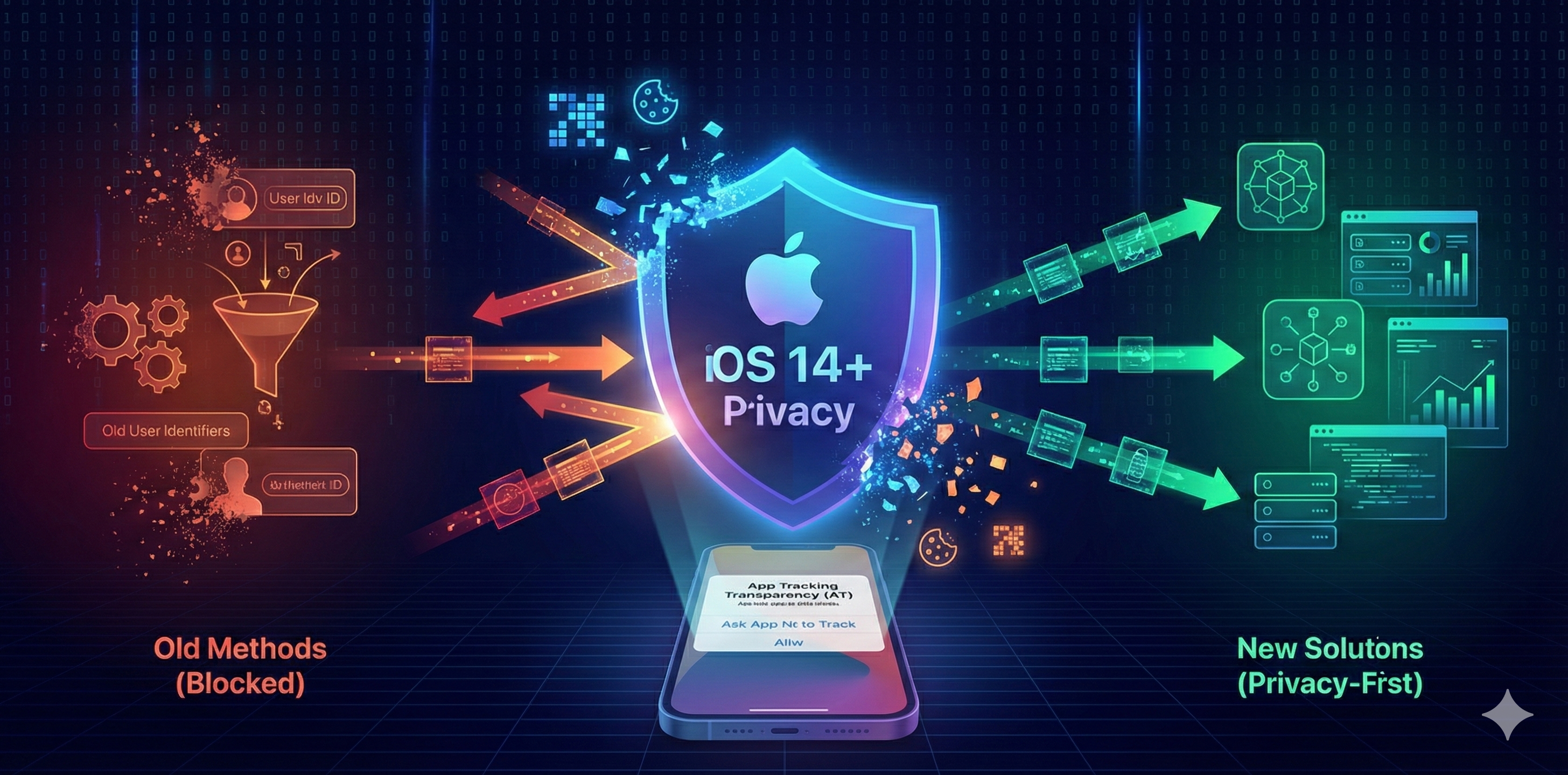
When Apple rolled out iOS 14's App Tracking Transparency (ATT) framework, it sent shockwaves through the digital marketing world. Overnight, attribution became significantly harder, and many brands saw their Facebook ad performance seemingly crater.
But here's the thing: Performance didn't actually crater—measurement did. The brands that understood this difference and adapted quickly are now thriving. Here's how they did it.
What Actually Changed
The Technical Reality
Apple's ATT requires apps to ask permission before tracking users across other apps and websites. Most users opt out, which means:
- Facebook can't track post-click behavior as effectively
- Attribution windows shortened dramatically
- Cross-device tracking became nearly impossible
- Pixel data became delayed and aggregated
The Business Impact
For most DTC brands, this meant:
- 20-40% decrease in trackable conversions
- Significantly reduced audience sizes for retargeting
- Less effective lookalike audiences
- Inflated reported CPAs
What Didn't Change (And Why That Matters)
Here's the critical insight: Customer behavior didn't change. People still discover brands, research products, and make purchases. The journey is the same—we just can't see it as clearly through Facebook's lens.
This means the brands that found alternative measurement methods gained a massive competitive advantage while others panicked and cut spend.
Adaptation Strategy #1: First-Party Data Infrastructure
The winners doubled down on first-party data collection:
Email Capture
- Aggressive email capture on landing pages
- Exit-intent popups with compelling offers
- Content gates for high-value resources
Server-Side Tracking
- Implemented Facebook Conversions API (CAPI)
- Set up server-side Google Analytics
- Built custom tracking infrastructure
Customer Data Platforms
- Unified data from all touchpoints
- Created persistent customer IDs
- Tracked the full journey in-house
Adaptation Strategy #2: Multi-Touch Attribution Models
Smart brands moved beyond Facebook's attribution to comprehensive multi-touch models:
- First-Touch Tracking: Capture initial discovery source
- Path Analysis: Map the complete journey
- Cross-Device Matching: Use heuristic and deterministic matching
- Offline Conversion Matching: Connect online attribution to offline purchases
Adaptation Strategy #3: Incrementality Testing
With less reliable attribution data, incrementality testing became crucial:
Geographic Holdout Tests
Run ads in some regions but not others, compare results.
Time-Based Tests
Pause campaigns for specific periods, measure impact.
Audience Exclusion Tests
Exclude certain segments, analyze differences.
Adaptation Strategy #4: Diversified Channel Mix
Over-reliance on Facebook became a liability. Successful brands diversified:
- Invested in organic channels (SEO, content, social)
- Explored alternative paid channels (TikTok, Pinterest, Google)
- Built direct traffic through brand and community
- Leveraged partnerships and affiliates
Adaptation Strategy #5: Creative-First Approach
With targeting less effective, creative became the differentiator:
- Massive increases in creative testing volume
- Broader targeting with creative doing the qualification
- User-generated content and testimonials
- Scroll-stopping hooks and native-feeling ads
The New Metrics Framework
Post-iOS 14, successful brands shifted their metrics focus:
Old Approach
- Platform-reported ROAS
- Last-click attribution
- 7-day click windows
New Approach
- Blended ROAS across all channels
- Multi-touch attribution models
- 30+ day attribution windows
- Incrementality-adjusted metrics
- MER (Marketing Efficiency Ratio)
Marketing Efficiency Ratio (MER)
MER became the hero metric for many brands:
MER = Total Revenue / Total Ad Spend
It's simple, hard to manipulate, and captures the full picture without relying on platform attribution.
Real Success Stories
Case Study: Skincare Brand
Pre-iOS 14: 4.2x ROAS on Facebook, $2M/month spend Post-iOS 14 Initial: Reported ROAS dropped to 2.1x, panic ensued After Adaptation: Implemented CAPI + MER tracking, discovered true ROAS was 3.8x, scaled to $3.5M/month profitably
Case Study: Apparel DTC
Challenge: Lookalike audiences stopped performing Solution: Shifted to broad targeting + creative testing, 5x increase in creative production Result: Better performance than pre-iOS 14 at lower CPAs
Action Plan for Your Brand
Week 1: Audit Current State
- How much visibility are you losing?
- What percentage of conversions are tracked?
- How accurate is your current attribution?
Week 2-4: Implement Quick Wins
- Set up Facebook CAPI
- Implement server-side GA4
- Start tracking MER
Month 2-3: Build Infrastructure
- Deploy comprehensive tracking solution
- Implement multi-touch attribution
- Create first-party data collection systems
Ongoing: Optimize and Test
- Regular incrementality testing
- Continuous creative refresh
- Channel mix optimization
- Journey optimization
The Silver Lining
While iOS 14 was disruptive, it actually created opportunities:
- Competitive Moats: Brands that adapted well are harder to copy
- Better Data: First-party data is more valuable and reliable
- Holistic View: Forced marketers to look beyond platform metrics
- Creative Renaissance: More focus on messaging and creative quality
Conclusion
iOS 14 didn't kill Facebook ads or digital marketing—it just raised the bar. The brands that invested in proper measurement infrastructure, diversified their approach, and focused on the fundamentals are now more profitable than ever.
The question isn't whether to adapt—it's how fast you can do it. Your competitors are already making these changes. Don't get left behind.
Share this insight
Help your network discover smarter analytics.