Multi-Touch Attribution Models Explained: Which One is Right for You?
Dive deep into attribution models—from linear to U-shaped to time decay—and learn which model fits your business best.

Multi-Touch Attribution Models Explained: Which One is Right for You?
Attribution modeling is one of the most important (and most misunderstood) concepts in digital marketing. Choose the wrong model, and you'll systematically overspend on some channels while starving others of budget.
Let's break down the most common attribution models, their strengths and weaknesses, and how to choose the right one for your business.
The Attribution Problem
Before we dive into models, let's understand the problem we're solving:
Most customer journeys involve multiple touchpoints:
- Sees Instagram ad → Doesn't convert
- Sees Facebook ad → Visits site, browses
- Receives email → Clicks, doesn't purchase
- Searches on Google → Clicks ad → Purchases
Which channel deserves credit? The answer depends on your attribution model.
Single-Touch Attribution Models
Last-Click Attribution
How It Works: 100% of credit goes to the last touchpoint before conversion.
Pros:
- Simple to understand and implement
- Clear cause-and-effect
- Good for direct-response campaigns
Cons:
- Completely ignores earlier touchpoints
- Over-values bottom-funnel channels
- Under-values awareness and consideration channels
Best For: Businesses with very short sales cycles or very simple customer journeys.
First-Click Attribution
How It Works: 100% of credit goes to the first touchpoint.
Pros:
- Values brand awareness efforts
- Good for understanding discovery channels
- Helps optimize top-of-funnel spend
Cons:
- Ignores nurturing and conversion efforts
- Over-values awareness channels
- Can lead to poor budget allocation
Best For: Brands focused on awareness and building large remarketing audiences.
Multi-Touch Attribution Models
Linear Attribution
How It Works: Credit is split equally across all touchpoints.
Example: 5 touchpoints = 20% credit each
Pros:
- Acknowledges all touchpoints
- Simple to understand
- Fair and unbiased
Cons:
- Treats all touchpoints as equally important
- Doesn't reflect reality of customer journey
- May overvalue low-impact touchpoints
Best For: Businesses that want a simple multi-touch model as a starting point.
Time-Decay Attribution
How It Works: More recent touchpoints get more credit, with credit decreasing as you go back in time.
Example:
- Touchpoint 4 (most recent): 40%
- Touchpoint 3: 30%
- Touchpoint 2: 20%
- Touchpoint 1: 10%
Pros:
- Values touchpoints closer to conversion
- Reflects recency bias in decision-making
- Better than last-click for long sales cycles
Cons:
- May undervalue early awareness efforts
- Arbitrary decay rates
- Not optimized for your specific journey
Best For: B2B or high-ticket ecommerce with longer sales cycles.
U-Shaped (Position-Based) Attribution
How It Works: 40% credit to first touch, 40% to last touch, 20% divided among middle touches.
Why It's Called U-Shaped: The credit distribution looks like a U when plotted.
Pros:
- Values discovery and conversion
- Acknowledges middle touches
- Balances top and bottom funnel
Cons:
- Arbitrary percentages (why 40-20-40?)
- May not match your actual journey
- Treats all middle touches equally
Best For: DTC brands with clear awareness and conversion phases.
W-Shaped Attribution
How It Works: 30% to first touch, 30% to lead conversion touch, 30% to opportunity creation touch, 10% divided among others.
Pros:
- Values key milestone touchpoints
- Good for B2B with defined funnel stages
- Reflects reality of complex journeys
Cons:
- Requires defined funnel stages
- Can be complex to implement
- May not fit ecommerce journeys well
Best For: B2B companies with clear lead and opportunity stages.
Data-Driven Attribution
How It Works: Uses machine learning to analyze your actual conversion data and assign credit based on statistical impact.
How It's Built:
- Analyze thousands of customer journeys
- Compare journeys that converted vs. didn't
- Calculate each touchpoint's marginal contribution
- Assign credit proportionally
Pros:
- Based on YOUR actual data
- Evolves as customer behavior changes
- Most accurate representation of impact
- No arbitrary rules
Cons:
- Requires significant data volume
- More complex to understand
- Can be seen as a "black box"
- May need technical expertise to implement
Best For: Brands with significant traffic and conversion data (1000+ conversions per month minimum).
Choosing Your Attribution Model
Consider Your Sales Cycle
Short Sales Cycle (< 1 day) → Last-click or simple multi-touch
Medium Sales Cycle (1-14 days) → Time-decay or U-shaped
Long Sales Cycle (14+ days) → W-shaped or data-driven
Consider Your Business Goals
Focus on Brand Awareness → First-click or U-shaped
Focus on Conversion Efficiency → Last-click or time-decay
Balanced Approach → Linear or U-shaped
Maximum Accuracy → Data-driven
Consider Your Data Volume
Low Volume (< 100 conversions/month) → Stick with simpler models (last-click, linear)
Medium Volume (100-1000 conversions/month) → Time-decay or U-shaped
High Volume (1000+ conversions/month) → Data-driven attribution
Implementing Multi-Touch Attribution
Step 1: Track Every Touchpoint
You need comprehensive tracking across all channels:
- Paid advertising (Facebook, Google, TikTok, etc.)
- Organic channels (SEO, social, direct)
- Email and SMS marketing
- Offline touchpoints (if applicable)
Step 2: Create Persistent User IDs
Match users across:
- Devices (mobile, desktop, tablet)
- Sessions (multiple visits)
- Anonymous and known states (pre and post email capture)
Step 3: Build Journey Maps
Reconstruct the complete path:
- Chronological order of touchpoints
- Time between touchpoints
- Channel and campaign details
- Conversion outcome
Step 4: Apply Attribution Model
Calculate credit for each touchpoint based on your chosen model.
Step 5: Analyze and Optimize
- Compare attributed conversions to platform-reported conversions
- Identify over and under-performing channels
- Adjust budgets based on true performance
- Test different models to find what works best
Common Mistakes to Avoid
Mistake #1: Set It and Forget It
Attribution models should evolve. Review quarterly and adjust as:
- Customer behavior changes
- New channels are added
- Sales cycles shift
Mistake #2: Using Different Models for Different Channels
This creates apples-to-oranges comparisons. Use the same model across all channels.
Mistake #3: Ignoring View-Through Attribution
Just because someone didn't click doesn't mean the ad had no impact. Consider view-through windows for display and video.
Mistake #4: Not Accounting for Offline Impact
Your digital ads might be driving in-store purchases. Don't ignore offline conversions.
Mistake #5: Over-Optimizing for Attribution
Attribution is a model, not truth. Use it as a guide, but combine with:
- Incrementality testing
- Brand lift studies
- Customer surveys
- Business intuition
Advanced Attribution Concepts
Algorithmic Attribution
Uses advanced machine learning to:
- Account for external factors (seasonality, competitors)
- Predict future performance
- Recommend optimal budget allocation
Cross-Device Attribution
Matches users across:
- Phones, tablets, laptops, desktops
- Work and personal devices
- Shared household devices
Offline Attribution
Connects digital touchpoints to:
- In-store purchases
- Phone orders
- Trade show interactions
The Future of Attribution
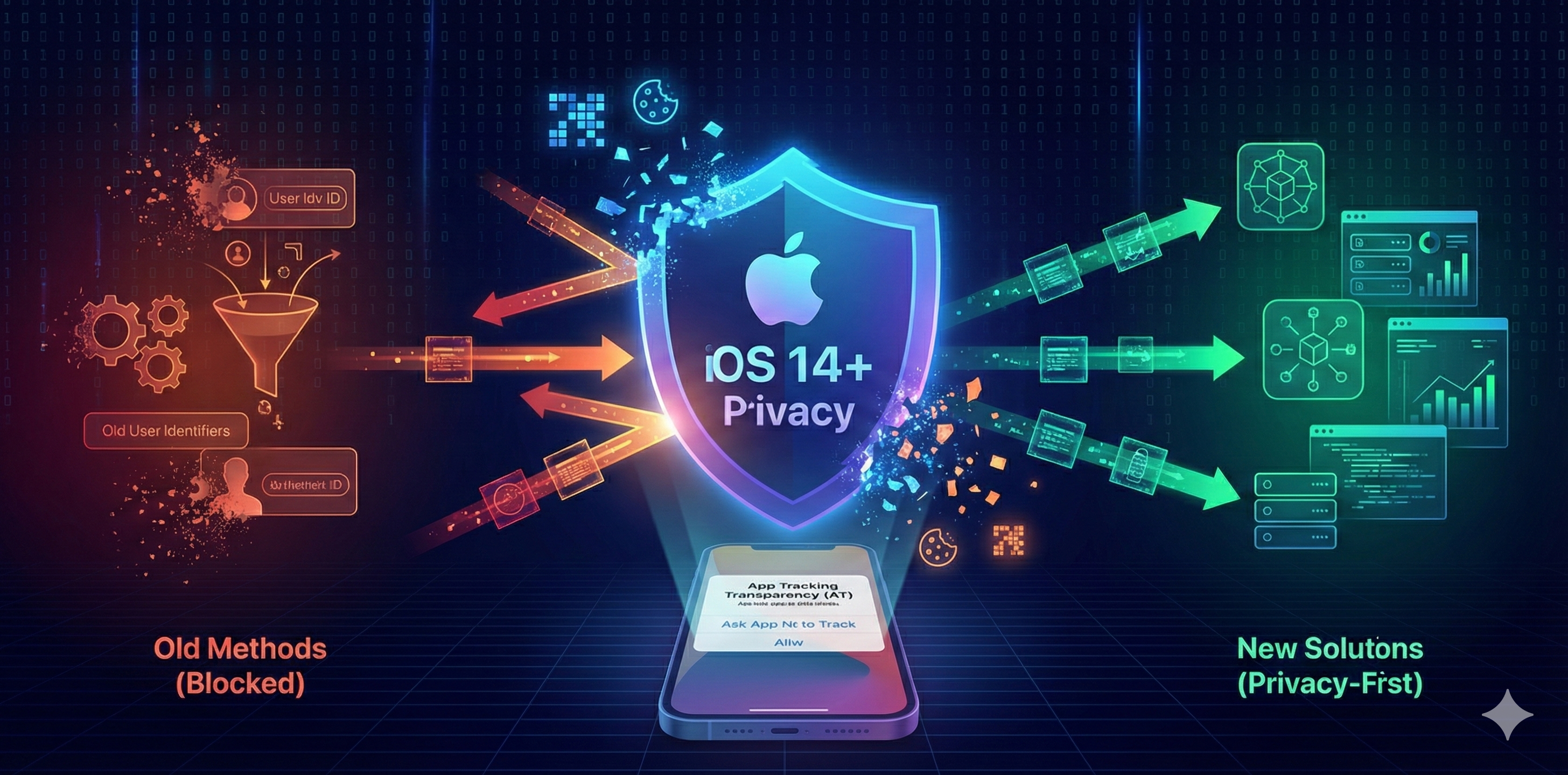
Privacy-First Attribution
As third-party cookies disappear and privacy regulations tighten:
- First-party data becomes critical
- Server-side tracking becomes standard
- Probabilistic modeling gains importance
Real-Time Attribution
Moving from:
- Weekly or monthly reporting
- Delayed insights
- Batch processing
To:
- Real-time dashboards
- Instant optimization
- Automated decision-making
Conclusion
There's no "best" attribution model—only the best model for YOUR business at THIS stage.
Start simple, get more sophisticated as you scale, and always remember: Attribution is a tool to make better decisions, not an exact science.
The goal isn't perfect attribution (impossible), but good enough attribution to make significantly better budget allocation decisions than your competitors.
Choose a model, implement it consistently, and use the insights to optimize. That's how you win.
Share this insight
Help your network discover smarter analytics.